
Blog
The Workshop Awakens Ruger 10/22 Chassis Innovation: Building American Pride

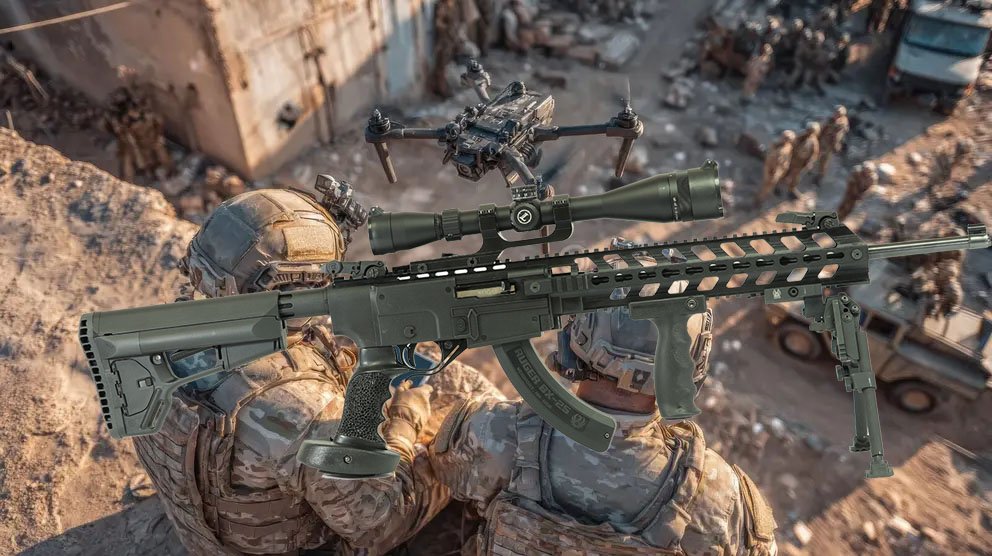
Ruger 10/22 ChassisThe early spring air in Fort Lauderdale carried the smell of salt and promise. For the first time in months, Alex’s garage felt different—not just a workspace, but the heartbeat of something bigger.
Racks of Ruger 10/22 chassis prototypes lined one wall, neatly labeled by batch. Each one a quiet testament to months of craftsmanship, testing, and steady belief.
Beside them hung a whiteboard with three words scribbled at the top: Build. Test. Refine.
He smiled. Those weren’t instructions—they were a life philosophy now.
Across the country in North Carolina, Kara stood in her small molding facility surrounded by whirring machines. She sent Alex a photo: a row of newly molded polymer frames cooling on stainless trays. The caption read, “Production ready.”
That notification hit him harder than any headline. It meant the dream was real.
When the first shipment arrived, Alex tore into the box like a child on his birthday. The Ruger 10/22 chassis inside looked flawless. Smooth edges, zero flashing, dimensions within tolerance down to the millimeter.
He installed one on a match .22 and checked the torque—solid bedding, perfect alignment. Then, with practiced calm, he shouldered the rifle, sighted in on the test target pinned beside the garage door, and fired.
The sound echoed crisp and clean, a note of confirmation. He logged the grouping data, tighter than any production variant before. This wasn’t just refinement—it was transformation.
“Innovation,” Alex whispered, “is what happens when passion meets precision.”
Scaling the Ruger 10/22 Chassis Dream
Scaling wasn’t glamorous. It meant spreadsheets, part numbers, supplier calls, and stress over mold wear warnings. But Kara’s background in design engineering made the difference—she caught small issues before they became big ones.
Together, they introduced tiny design tweaks: steel-reinforced mounting points for longevity, heat-dissipating channels to maintain polymer strength over thousands of rounds, an adjustable comb height with micro-notch accuracy.
Those modifications didn’t just improve quality—they redefined what shooters could expect from the best for Ruger 10/22 chassis rifles built by small manufacturers.
Their online store went live that evening, under a simple banner: “Built in America. Designed for Balance.”
Orders trickled in, then surged. Enthusiasts from Colorado, Oregon, and Maine left messages praising the lighter balance and natural ergonomics. Alex responded to every one personally.
Each review felt like fuel.
The Heart of Craftsmanship
Late one night, Kara called. Her voice carried fatigue and excitement in equal measure. “We hit batch fifty today,” she said. “And zero returns.”
Alex laughed, leaning back in his chair. “Then we’re doing it right.”
“Not just right,” she replied. “We’re doing it better.”
Those words echoed long after the call ended. Because this wasn’t about proving that polymer could replace metal—it was about proving that ingenuity could beat indifference, that craftsmanship still mattered in a world obsessed with shortcuts.
The Turning Point
They were invited to showcase the product at a small manufacturing expo in Raleigh. Alex almost said no; he hated crowds and preferred the quiet hum of his machines. But Kara insisted—it was time to show the world what quiet innovation looked like.
Their booth sat between CNC automation firms and robotics startups. Amid flashing screens and high-gloss displays, their single rifle—dressed in sleek polymer curves—stood humble yet magnetic.
Visitors stopped. They lifted it. They shouldered it. And every time someone caught that perfect balance, that lighter feel, they smiled.
“Wait,” one attendee said, “this is polymer?”
“Glass‑reinforced nylon,” Alex replied with pride. “Rigid, precise, American‑made.”
The man nodded slowly. “That’s the future.”
For once, Alex didn’t correct him. He knew it was.
A Future Built Together
When the expo ended, orders doubled again. A small firearm magazine requested an interview. And as he watched Kara post behind-the-scenes photos online, the #IndustrialRenaissance hashtag from last year’s speech trended anew—this time not from politics, but from practice.
The country hadn’t changed overnight. But one small workshop, one shared dream, was building its piece of tomorrow.
In the coming months, they’d face setbacks—supply delays, tooling fatigue, even skepticism from legacy brands—but that would come later.
For now, under the hum of the workshop lights, Alex smiled at the newest chassis lying on the bench. It wasn’t just lightweight.
It carried the weight of belief—stronger, smarter, and proudly molded in America.