
Blog
The Backbone: KR9 Magazines of the KUSA and KP9

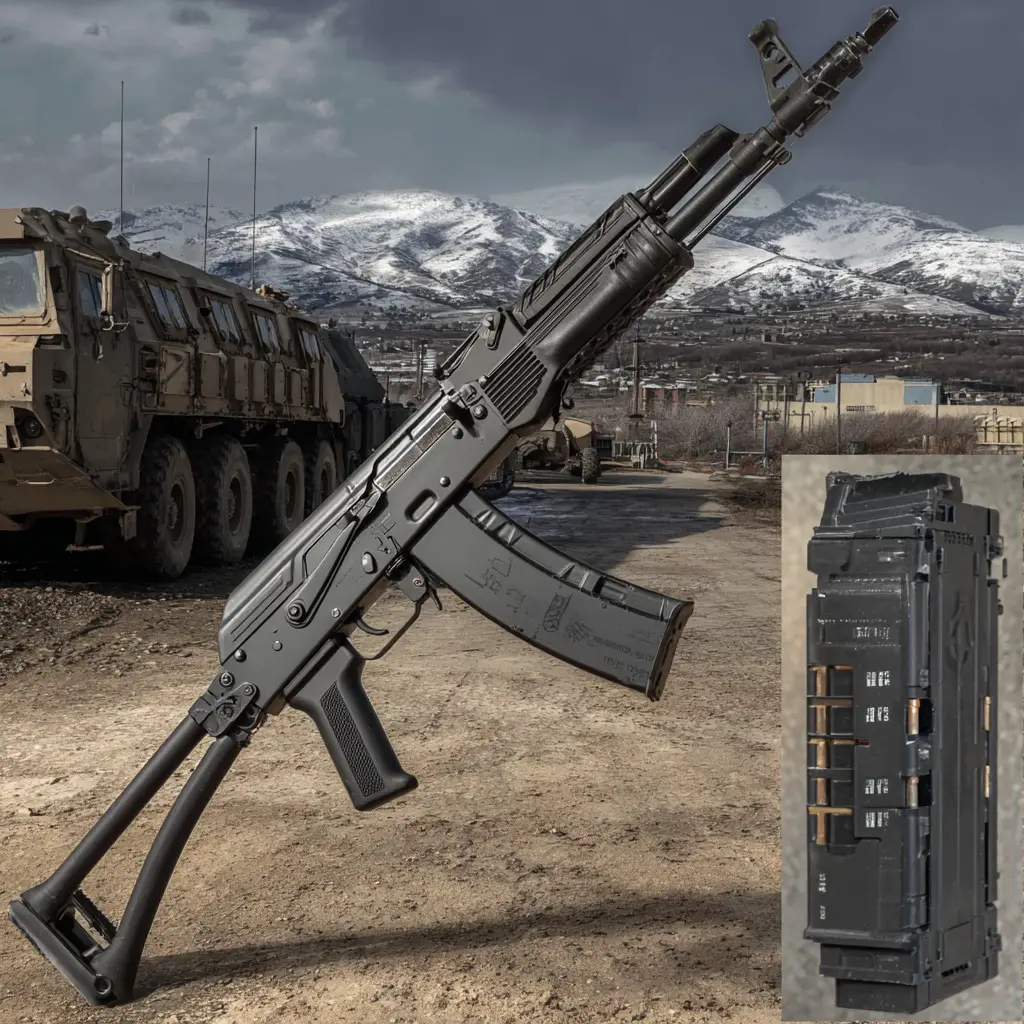
When most shooters talk about rifles or carbines, they focus on barrels, optics, triggers, or stocks. Very few people pause to think about the one component that makes or breaks the firearm in real-world use—the magazine. But after spending months with the Kalashnikov KR9, I came to realize that the KR9 magazine wasn’t just an accessory. It was the silent hero of the platform.
The first time I loaded one, I noticed the build quality immediately. It had the heft of something engineered for durability. The polymer was dense but not brittle, the feed lips reinforced in a way that inspired confidence. And most importantly, every time I pulled the trigger, it fed flawlessly.
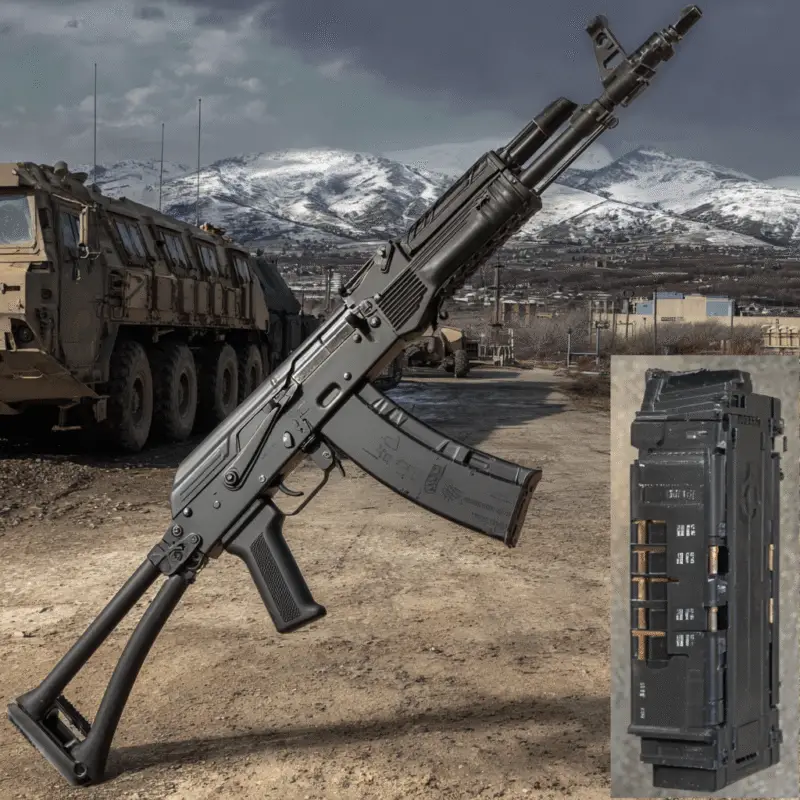
It sounds simple, but anyone who’s spent time with firearms knows how rare that is. Magazines are often the weak link. A bad one turns even the best rifle into a jam-prone mess. The designers at Kalashnikov USA KR9 clearly understood this. They built the KR9 magazine to match the rifle’s DNA—rugged, reliable, and simple.
The more I used them, the more I appreciated that design. Dropped on concrete? No problem. Submerged in mud? A quick rinse and it was back in action. Left loaded for weeks? The spring tension held up without issue. These weren’t disposable range mags. They were tools built for real use.
When I compared them to the KP9 magazine used by the KUSA KP9, the similarities stood out. Both were cut from the same design philosophy, with minor differences in fit and dimensions depending on the platform. What tied them together was consistency. No matter the situation, whether it was the rifle-style Kalashnikov KR9 or the pistol-format Kalashnikov KP9, the magazines never became a liability.
One night, scrolling through forums, I came across a debate that opened my eyes further. Shooters were comparing the Vityaz KP9 from Russia with the American-made KR9 and KP9. Some argued that the Russian originals had a certain mystique, but many admitted that the American versions had an advantage when it came to magazine reliability. The Kalashnikov USA KR9 and its sibling KUSA KP9 weren’t just matching heritage—they were refining it.
I started experimenting. I ran drills in the rain, reloaded on gravel, and practiced rapid-fire strings until my shoulder ached.
Every time, the KR9 magazine fed without hesitation. And it wasn’t just me. Friends who borrowed the rifle came back with the same remark: “Man, those mags run smooth.”
That’s when I realized something deeper. The magazine wasn’t just an afterthought—it was the backbone of why the KR9 and KP9 were gaining such a strong reputation among shooters. You can design the most precise firearm in the world, but if the magazine falters, the whole system collapses. Kalashnikov’s engineers knew this decades ago with the AK series, and Kalashnikov USA clearly carried that lesson forward into their American-made 9mm platforms.
The twist came a few weeks later when I visited a private training course. The instructor, a retired law enforcement officer, had integrated the Kalashnikov KP9 into his curriculum. To my surprise, he wasn’t just demonstrating with it—he was actively encouraging students to consider the platform for civilian defense training.
When I asked him why, his answer was simple: “It runs. Every time. The rifle’s great, sure. But the real secret is those magazines. I can drop them in the dirt, step on them, leave them in the sun—doesn’t matter. They just don’t quit. That’s why the KP9 magazine and KR9 magazine stand out. You can trust them.”
Hearing that from someone who had spent decades relying on firearms under pressure drove the point home. These rifles weren’t just range favorites—they were beginning to carve a niche in practical training, law enforcement exercises, and even home-defense circles. And all of it hinged on the quiet reliability of the magazines.
Back home, I lined up the different pieces of my collection: AR mags, Glock mags, imported steel AK mags, and my growing pile of KR9 and KP9 mags. I thought about how each design told a story. The AR mags had evolved through trial and error. Glock mags were praised for simplicity but sometimes criticized for bulk. AK mags were indestructible but heavy.
The Kalashnikov KR9 and KUSA KP9 magazines struck me as a perfect middle ground. Lightweight yet durable, reliable without being finicky, and engineered with modern materials but old-world toughness. They were, in every sense, the backbone of the rifle’s success.
As the weeks rolled on, I noticed more and more shooters at my local range asking about them. Some were curious about the Kalashnikov KP9 itself, while others wanted to know if the magazines lived up to the hype. My answer never changed: “Yes. And then some.”
What fascinated me most was how the magazines had become a quiet selling point in online discussions. While flashy optics and stocks grabbed attention, experienced shooters kept coming back to one thing: reliability. And that reliability started with the mag.
By the time summer rolled around, I had put thousands of rounds through my KR9, using the same magazines I’d started with. They showed scratches, dents, and wear from hard use, but they still fed perfectly. No cracks, no failures, no excuses.
In a market overflowing with options, the Kalashnikov KR9 and KUSA KP9 had proven themselves in a way that flashy marketing never could. They had done it the hard way—round after round, reload after reload, proving that heritage and craftsmanship still mattered.
And as I locked the last mag into place one quiet evening at the range, I realized the truth. The rifle was excellent, no doubt. But it was the KR9 magazine—unassuming, tough, and absolutely dependable—that made me trust the platform with more than just paper targets.
The backbone wasn’t flashy, but it was real. And for any serious shooter, that was the difference between a passing trend and a lifelong tool.