
Blog
The Super Safety Trigger Range Officer’s Change of Heart

Tom had been a range officer for nearly two decades, and he prided himself on being cautious. He had seen fads come and go—binary triggers, bump devices, and all sorts of strange attachments. When people started talking about the super safety trigger, he folded his arms and frowned. Anything labeled as a “Force Reset Trigger” sounded suspicious to him. His job was to keep everyone safe, and he wasn’t about to let something questionable slip past his rules.
At first, he simply banned all FRT‑type gear at his range. The memos he had skimmed left him with the impression that forced‑reset devices might blur the line between semi‑automatic and fully automatic fire. But over time, regular members began asking him specifically about the Super Safety trigger FRT. They said it was different, that it still required a separate, intentional trigger pull for each round. One day, a trusted member offered to let Tom inspect and test a Super Safety AR15 he had just built. Tom agreed, determined to prove his suspicion right—or update his views if he had been wrong.
Inspecting the Super Safety AR15 Up Close
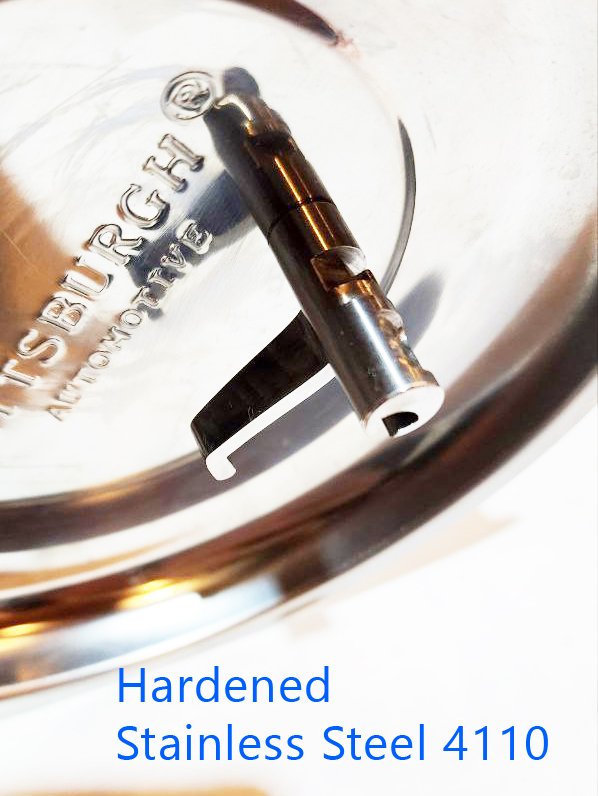
In the classroom, Tom cleared the rifle and opened it up. Inside, he examined the Super Safety components: the cam, lever, detent, and milled trigger. Everything looked clean and solid, made from hardened stainless parts that seemed designed for durability rather than gimmicks. The compact push‑button selector replaced the traditional lever, but it still offered a clear safe and fire position.
What intrigued him most was how the Super Safety trigger interacted with the firing cycle. The member explained that the Super Safety FRT uses mechanical energy from the bolt carrier to drive the trigger forward into reset. It didn’t hold the trigger down or fire multiple rounds through a single function. Instead, after each shot, the super safety trigger snapped back into the ready position, requiring the shooter to press it again. That matched the principle Tom had always taught: one trigger pull, one shot.
Live‑Fire Testing the Super Safety Trigger
Reluctantly, Tom took the Super Safety AR15 out to a private bay for testing. He loaded a few rounds, placed the rifle firmly in his shoulder, and pressed the trigger. The shot broke cleanly, and the Super Safety trigger FRT snapped forward with surprising authority. Without even meaning to, his finger followed the reset and pressed again, creating a quick but clearly separate second shot.
He paused, thinking carefully. Each round he fired felt like a distinct decision. There was no continuous fire, no uncontrolled burst—just a trigger that returned faster than he was used to. After several magazines, Tom realized that his old fear was based more on terminology than on how this specific system behaved. The Super Safety FRT simply gave the shooter a more assertive reset, but it never eliminated the need for conscious trigger control.
How the Super Safety Trigger Earned a RO’s Approval
Back in the office, Tom reviewed his safety checklist. The key questions remained: Did the trigger allow more than one round per single function? No—it demanded a new press each time. Did the Super Safety selector still provide a clear, reliable safe position? Yes. Did the Super Safety AR15 build encourage reckless behavior, or did it simply reward practiced discipline? From what he had felt on the line, it was the latter.
He studied his own notes and compared them with the testimonies of experienced shooters who had adopted the super safety trigger. The Super Safety trigger FRT gave a strong tactile reset that actually helped some shooters avoid “riding” the trigger or short‑stroking it. In other words, it made it easier to apply safe, consistent trigger techniques—the very habits he tried to instill at his range.
A New Policy and a New Perspective
After a week of consideration, Tom called a staff meeting. He explained how the Super Safety trigger worked, demonstrating with clear diagrams and emphasizing that each shot still required its own trigger pull. He also laid out guidelines: shooters using any FRT, including the Super Safety FRT, would still be held to strict muzzle and trigger discipline, and unsafe handling would not be tolerated.
To the surprise of some members, Tom announced that the range would now allow the Super Safety AR15 configuration during normal hours, so long as all standard rules were followed. He even admitted that his initial reaction had been rooted in caution rather than firsthand knowledge.
As weeks passed, several shooters installed the super safety trigger on their rifles. Tom watched their sessions closely. He saw faster follow‑ups, but he also saw careful, deliberate technique. No one suddenly turned reckless; if anything, the decisive reset of the Super Safety trigger FRT seemed to encourage better control.
One afternoon, a new shooter approached Tom nervously, asking if the Super Safety AR15 setup was really “okay” to use. Tom smiled, something he didn’t do often in uniform. “As long as you remember that every shot is your responsibility,” he said, “this trigger can actually help you be more consistent.”
In that moment, the strict range officer who once banned all FRTs realized how far he had come. The Super Safety system had not only changed his policy; it had reminded him of the value of learning before judging.